The Rhythm Beneath the Story: How Temporal Choices Define a Filmmaker's Voice
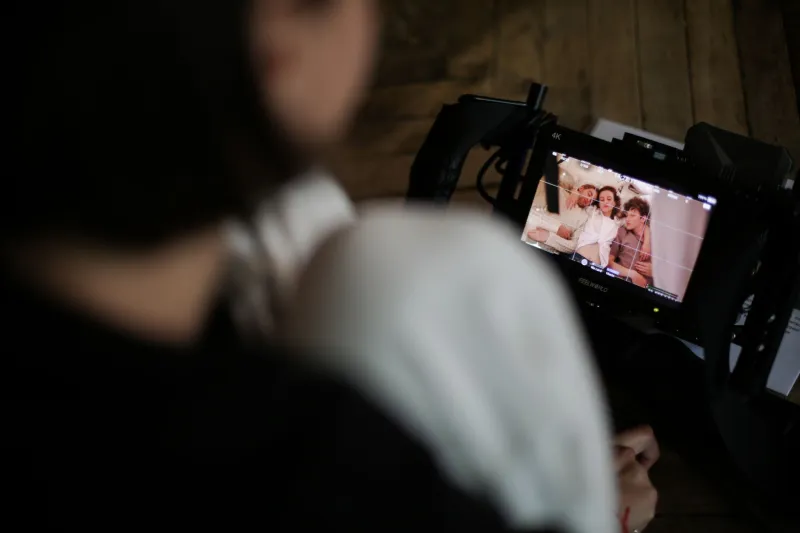
There is a particular kind of silence in cinema that audiences rarely consciously register but almost always feel. It arrives in the fraction of a second after a door closes, or in the held stillness of a face before dialogue resumes. It is not absence. It is architecture. And the directors who understand this distinction are the ones whose work tends to outlast the moment of its release.
Pacing is frequently misunderstood as a structural concern—something addressed in the editing suite through decisions about sequence and rhythm. In reality, it begins much earlier. It lives in the script, in the blocking, in the choice of lens, in how long a camera operator is instructed to hold before cutting. By the time a film reaches the editing room, pacing is already embedded in the raw material. The editor's job is not to create it from nothing but to honor, refine, or occasionally rescue what the director has built.
What Gets Left In the Frame
Consider two hypothetical versions of the same scene: a character receives devastating news and then walks to a window. In the first version, the camera cuts away the moment the character turns. In the second, it holds—perhaps for three, four, or five seconds—watching them stand there before the scene ends. The information conveyed is identical. The emotional experience is not.
That held moment invites the audience into a space of co-creation. Viewers are no longer passive recipients of a scripted emotional cue; they are participants, projecting their own understanding of grief, shock, or resignation onto a face that is no longer performing. This is one of cinema's most powerful and underutilized mechanisms, and it costs nothing except the confidence to trust that an audience will stay with you.
Independent productions, often operating without the safety net of franchise recognition or major marketing budgets, tend to rely on this mechanism more deliberately. A well-documented example within documentary and narrative indie circles is the long-take approach, where extended, uninterrupted sequences force viewers to metabolize rather than merely observe. The commercial pressures of studio filmmaking frequently work against this instinct, demanding tighter cuts and faster payoffs—a trade that occasionally produces efficient entertainment but rarely produces lasting resonance.
The Commercial Production Parallel
This principle is not exclusive to feature filmmaking. Commercial and branded content studios face an analogous challenge, though the stakes are expressed differently. A thirty-second brand spot that cuts every one-and-a-half seconds communicates urgency and stimulation. One that allows a single image to breathe for four seconds communicates authority, restraint, and confidence. Neither approach is universally superior. But the choice should be intentional, and it should align with what the brand is actually trying to say about itself.
At Haffelder Studios, this question surfaces regularly in early creative conversations with clients. The instinct, particularly among clients newer to the production process, is to assume that faster always means more engaging. The evidence does not support this. Some of the most effective brand films produced in the last decade have derived their impact precisely from what they withheld—from the willingness to let a product, a landscape, or a human face occupy the frame without competition.
The director's role in these conversations is partly educational. Explaining why a specific shot needs to hold longer than a client's initial instinct suggests requires articulating what pacing actually does to viewer psychology—how it governs not just attention but interpretation, not just engagement but memory.
Pacing as Emotional Argument
A useful way to think about temporal decisions is to treat them as a form of argument. Every time a director cuts, they are making a claim: this moment has been sufficiently experienced; we are ready to move forward. Every time they hold, they are making a different claim: there is more here than you have yet absorbed. These claims, accumulated across the length of a film, constitute a kind of invisible thesis—one that audiences process emotionally rather than intellectually, but process nonetheless.
This is why two films covering similar subject matter can produce radically different viewer responses. The content may be comparable; the argument embedded in the pacing is not. A documentary about industrial decline that cuts briskly through interviews and archival footage delivers information. One that lingers on the stillness of an empty factory floor or the silence after a difficult answer delivers an experience. The distinction is not about production budget or technical complexity. It is about the director's willingness to make a sustained temporal argument and hold it under pressure.
The Editor's Inheritance
It is worth acknowledging the editor's role in this dynamic, because pacing is ultimately a collaborative discipline. Directors who shoot with pacing in mind give their editors material that supports intentional rhythm. Directors who do not—who cover every scene exhaustively without a clear sense of how they want time to feel—leave their editors in the difficult position of constructing a temporal logic from footage that was never designed to support one.
The best editorial relationships are those where the director's pacing instincts and the editor's structural sensibility are in genuine dialogue. This requires the director to articulate not just what they want audiences to see but what they want audiences to experience in time—a distinction that sounds abstract but has immediate, practical implications for how footage is shot and organized.
In commercial production contexts, this dialogue often happens under compressed timelines, which makes it all the more important that pacing intentions are established before production begins rather than negotiated in post. A client brief that specifies desired emotional tone should, ideally, also specify something about temporal texture—whether the work should feel urgent or contemplative, dense or spacious. These are not aesthetic preferences divorced from strategy. They are strategic decisions expressed through aesthetic means.
What Silence Costs, and What It Earns
There is a professional risk in defending slowness. In a landscape where attention metrics dominate creative conversations and retention curves are analyzed with clinical precision, arguing for restraint requires both conviction and evidence. The evidence exists. Films that allow their audiences room to feel tend to generate the kind of word-of-mouth and critical attention that outlasts the opening weekend. Brand films that resist the urge to fill every second with information tend to be remembered longer and associated more positively with the brands they represent.
None of this is an argument against pace or energy. There are stories that demand velocity, and the directors who understand pacing understand this too—because the same instinct that tells a filmmaker to hold on a face also tells them when to cut hard and fast and without apology. Mastery of tempo is not a preference for slowness. It is fluency in the full range of temporal language, deployed in service of what the story actually requires.
The silence between cuts is where a director's true vision becomes audible. Learning to trust it—and to defend it—is among the most consequential skills a filmmaker can develop.