Lost in Transmission: How Creative Intent Fractures Across Production Departments
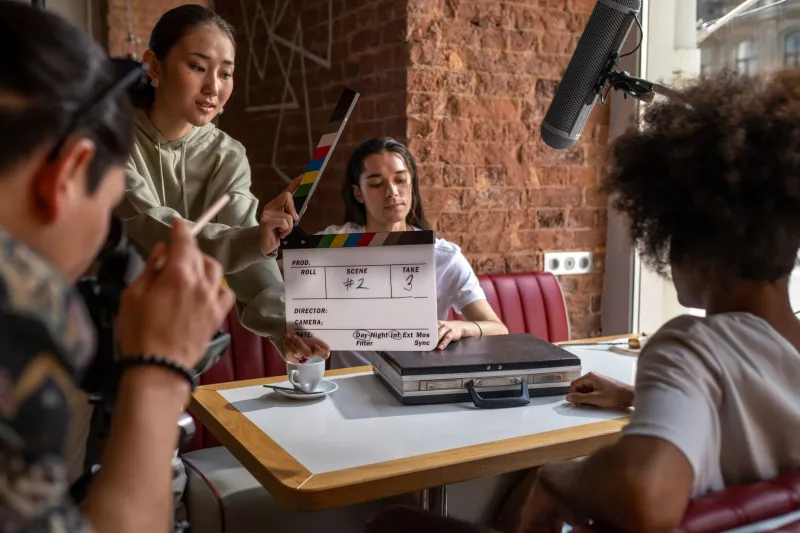
There is a particular kind of disappointment that experienced directors and creative producers know well. It arrives not during production, when problems are visible and correctable, but at the final review — when a project that felt alive at the concept stage appears on screen stripped of the very qualities that made it worth pursuing. The cinematography is technically accomplished. The edit is clean. The color grade is polished. And yet something essential has departed. The vision, somewhere between the conference room and the color suite, has been quietly translated into a language no one originally agreed to speak.
This is the handoff problem. And in the American commercial and independent production landscape, it remains one of the most underexamined sources of creative failure.
The Illusion of a Shared Vision
Every production begins with a document — a treatment, a creative brief, a director's statement — that attempts to articulate something fundamentally resistant to articulation: feeling. The language used in these documents is necessarily impressionistic. Words like intimate, urgent, textured, or melancholic carry different weights depending on who reads them.
When a director of photography interprets intimate as shallow depth of field with warm practical lighting, while the production designer interprets it as sparse, minimalist set dressing, and the editor interprets it as slow, contemplative pacing, three technically correct decisions combine to produce something tonally incoherent. None of these professionals made an error in isolation. The error occurred in the space between them — in the assumption that a shared vocabulary had been established when, in fact, each department had constructed its own private translation.
This is not a failure of talent. It is a failure of infrastructure.
Where the Fractures Form
The most consequential handoffs in any production occur at predictable junctures: from concept to production design, from production design to principal photography, from the director's cut to the editing room, and from the edit to post-production finishing. Each transition represents a moment where interpretive authority shifts, and where the original intent becomes subject to reinterpretation.
Consider the transition from concept to production design. A director may have spent weeks developing a precise emotional logic — the way a character's environment should feel suffocating in act one and expansive by act three. If that logic is communicated only through reference images and a brief conversation, the production designer is left to infer structural meaning from aesthetic surface. The visual references are adopted; the emotional architecture behind them is not.
The edit presents a different but equally significant fracture point. Editors working from assembled footage rather than from an active dialogue with the director's intent will make decisions that are internally consistent with the footage they have — but may contradict the emotional priorities that governed how that footage was shot. A sequence paced for tension on set may be tightened for rhythm in the edit, inadvertently removing the discomfort that gave it meaning.
Post-production finishing — color grading, sound design, visual effects integration — compounds these issues further. By this stage, the director may be less present, budgets are tightening, and the finishers are working from a locked cut rather than from any living conversation about intent. Decisions made here can fundamentally alter the emotional register of a film, and often do.
The Structural Causes
American production culture has become increasingly specialized. This specialization produces genuine excellence within departments, but it also creates silos. Department heads are hired for their expertise and granted significant creative autonomy within their domains. That autonomy is valuable — but without deliberate connective tissue, it becomes a vector for fragmentation.
Production schedules rarely allocate meaningful time for cross-departmental creative alignment beyond the initial prep period. Once cameras roll, each department is focused on its own deliverables. The director, often the only person with visibility across all departments simultaneously, is also the person under the most acute pressure to simply get the day's work done. The work of maintaining creative coherence — of continuously translating intent across specializations — falls to no one in particular, and so it falls apart.
Budget pressures accelerate this. When timelines compress, the first casualties are the conversations that feel supplementary: the extended tone meeting, the post-production review session, the mid-edit check-in where the director revisits the emotional logic of the cut. These feel like luxuries. They are, in fact, load-bearing.
Frameworks for Preservation
The solution is not to reduce departmental autonomy or to micromanage creative specialists. It is to build communication infrastructure that allows intent to travel with the project rather than being deposited at the start and abandoned.
Establish an intent document, not just a visual bible. Reference images communicate aesthetic preference. An intent document communicates why — the emotional logic, the thematic architecture, the specific feeling the project is designed to produce in a viewer at each stage. This document should be living, updated as the project evolves, and accessible to every department head.
Designate a creative continuity role. On larger productions, this may be a dedicated position. On smaller projects, it may be a responsibility explicitly assigned to a producer or first assistant director. The function is the same: to monitor the translation of intent across handoffs, ask the questions that departments won't ask each other, and surface misalignments before they become locked into the cut.
Build formal handoff reviews into the schedule. Before principal photography begins, production design should present its work not to the director alone but in a structured session that includes the director of photography. Before the editor begins assembling, the director should articulate — verbally and in writing — the emotional priorities for each sequence, not just the structural ones. Before color grading begins, a dedicated session should reconnect the colorist to the original intent, not merely to technical specifications.
Create feedback mechanisms that run backward as well as forward. Departments should have a structured channel for flagging when incoming materials — a set, a cut, a grade — seem to diverge from the established intent. This is not an invitation to second-guess colleagues; it is a quality control mechanism for the project's coherence.
The Cost of Getting This Wrong
For commercial clients, the consequences of the handoff problem are measurable. A brand film that arrives tonally inconsistent with the brief requires expensive revisions or, worse, is delivered and deployed despite its misalignment — producing audience responses that the brand cannot explain and the production company cannot defend.
For artistic work, the cost is harder to quantify but no less real. A project conceived with genuine creative ambition and executed by talented individuals can still arrive diminished — not because anyone failed at their specific job, but because the connective tissue between jobs was never built.
At Haffelder Studios, the belief that drives our approach to production is straightforward: a great concept deserves the infrastructure to survive its own making. Creative vision is not self-preserving. It requires deliberate, structural support at every point where one set of hands passes the work to another. The projects that endure — commercially and artistically — are almost always the ones where that support was not left to chance.