Where the Money Goes Missing: A Clear-Eyed Look at the Hidden Costs That Derail Independent Productions
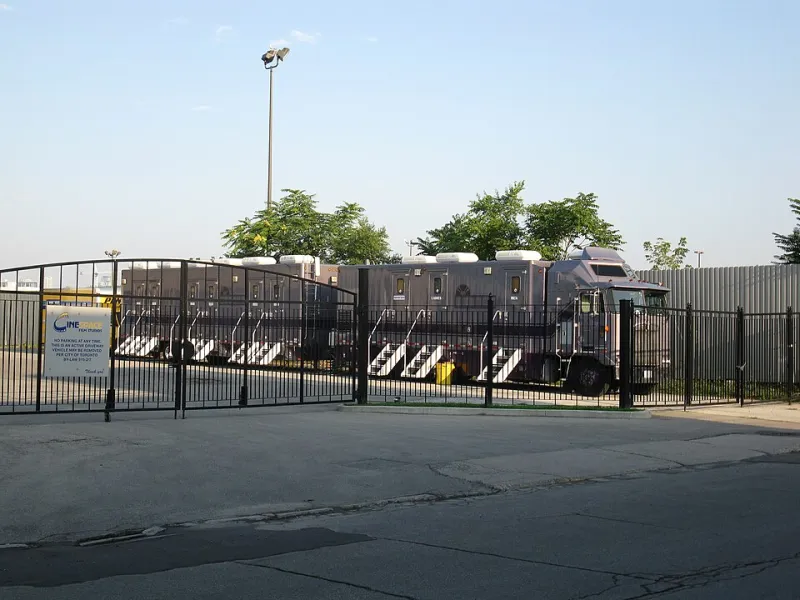
Photo: booledozer, Public domain, via Wikimedia Commons
The budget looks solid on paper. The below-the-line costs are itemized. The crew rates are confirmed. The location has been scouted, the equipment is reserved, and the shoot schedule fits neatly inside the financing window. Everything is accounted for.
And then production begins, and the money starts moving in directions no one planned for.
This is not an unusual story. It is, in fact, the most common story in independent film and small-to-midsize commercial production. The gap between what a project was budgeted to cost and what it actually costs is rarely explained by a single catastrophic decision. It is the accumulation of smaller miscalculations—permit fees that were estimated too loosely, insurance riders that were not pulled until the last minute, post-production timelines that assumed best-case scenarios across every phase.
Understanding where budgets actually fail is more useful than general advice about being conservative. What follows is a specific, scenario-grounded examination of the cost categories that most frequently surprise independent productions, and what a more defensible planning approach looks like in practice.
Permits: The Cost Nobody Fully Models
Location permits are one of the most consistently underestimated line items in independent production budgets. The misunderstanding usually begins with the permit fee itself, which is often a publicly listed number and therefore feels knowable. What productions fail to model is everything surrounding that fee.
Consider a production shooting on public property in a major American city. The permit fee for a given location might be a few hundred dollars per day. But the permit application may require proof of insurance at specific coverage levels, which triggers a conversation with the production's insurance broker that reveals the existing policy does not cover that jurisdiction's requirements. Upgrading the policy costs money. The permit may also require the presence of a city-appointed fire safety officer or law enforcement liaison—costs that fall to the production and were not in the original budget.
Then there is the timeline. Permit approvals in cities like Los Angeles, New York, and Chicago can take weeks. A production that did not build lead time into its pre-production schedule may face a choice between delaying the shoot or moving to an alternative location that was not scouted or dressed, which introduces its own cascade of costs.
The practical remedy is to research the full permitting ecosystem of every location before locking the budget—not just the fee, but the insurance requirements, the staffing mandates, the application timeline, and the likelihood of approval given the nature of the shoot. This is not glamorous pre-production work, but it is among the most financially consequential.
Insurance Gaps: The Risk You Did Not Know You Were Carrying
Production insurance is an area where independent projects frequently operate on assumptions that hold until they do not. The most common gap is not a failure to obtain coverage—most productions carry a general liability policy and some form of equipment coverage. The gaps tend to appear at the edges.
Errors and omissions insurance, which protects against claims related to the content of the finished work, is frequently deferred by independent productions until distribution becomes a real possibility. But clearing that coverage after the fact, particularly if the film contains archival footage, music, or real locations with signage and branding, can be significantly more expensive than obtaining it during production—and some claims cannot be resolved without costly re-editing.
Workers' compensation is another area where independent productions sometimes make optimistic assumptions about who qualifies as an independent contractor versus an employee under state law. The classification rules vary by state and have been the subject of increased enforcement attention in California and New York in recent years. A misclassification discovered after a crew member files a claim can expose a production to costs that dwarf what a compliant policy would have required.
Building a relationship with a production insurance specialist—not just a general commercial broker—before the budget is finalized is one of the highest-return investments an independent production can make. The conversations that emerge from those consultations consistently surface exposure that productions did not know they were carrying.
Contingency: The Number That Is Almost Always Wrong
The standard contingency recommendation for independent film budgets is ten percent of the total below-the-line cost. This figure is repeated so often that it has acquired the authority of a rule, which it is not.
Ten percent contingency may be appropriate for a production with a highly experienced crew, a controlled environment, a locked script, and a post-production pipeline that has been used before. For a production shooting on practical locations across multiple jurisdictions, with a first-time director, and a post workflow that has not been fully designed, ten percent is almost certainly insufficient.
A more useful approach is to build contingency at the category level rather than as a single aggregate. Equipment contingency should reflect the likelihood of equipment failure or upgrade needs given the complexity of the shoot. Location contingency should account for the possibility that a primary location falls through and a replacement must be secured quickly. Post-production contingency deserves particular attention, because it is the phase most frequently underbudgeted at the outset.
Post-Production: Where Optimism Goes to Die
Post-production budgets are built during pre-production, which means they are built before anyone knows how the footage actually looks, how the edit is actually going, or what the sound mix actually requires. The assumptions embedded in those early estimates are almost always optimistic.
Color grading is a recurring source of overruns. A production that budgeted for a standard color pass may discover in the edit that inconsistencies in the footage—caused by changing light conditions, camera operator variation, or equipment issues—require significantly more time in the grade to resolve. The cost of that additional time is real, and it is rarely covered by the original post budget.
Sound is another area where independent productions routinely underestimate. A dialogue-heavy film with location sound recorded under imperfect conditions may require extensive automated dialogue replacement, which involves bringing actors back into a studio, booking the studio time, and paying for the sessions. Productions that did not budget for ADR because they assumed the production sound would be usable often find themselves facing that cost in post with no allocation to cover it.
Visual effects present a similar pattern. Projects that include practical effects elements that require digital cleanup, or that added VFX shots during production that were not in the original plan, frequently discover that the post budget was written for a different version of the film.
Building a Budget That Actually Holds
The goal of a well-constructed production budget is not to predict the future with precision—that is not possible. The goal is to build a financial structure that can absorb the specific kinds of surprises that independent productions reliably encounter, without requiring the project to compromise its core creative commitments.
This means researching costs at a granular level rather than relying on estimates. It means consulting specialists—insurance brokers, location managers, post supervisors—during the budgeting phase rather than after it. It means building contingency that reflects the actual risk profile of the specific project, not an industry average.
It also means being honest, early and directly, with everyone who has a financial stake in the project about what the budget is actually based on and where the uncertainty lives. Funders, partners, and clients who understand the risk landscape from the beginning are far better positioned to respond constructively when reality diverges from the plan.
The projects that protect both their financial integrity and their creative vision are almost always the ones where the budget was treated as a serious analytical exercise from the start—not a formality to be completed before the real work could begin.