Hired for Brilliance, Managed Into Mediocrity: The Hidden Cost of Underutilizing Your Own Creative Team
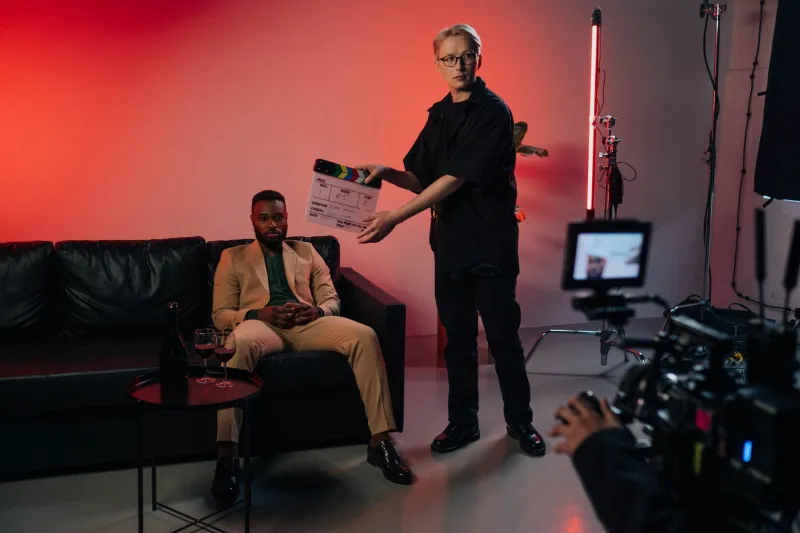
There is a particular kind of institutional irony that plays out in production studios across the country with surprising regularity. A studio spends months—sometimes longer—searching for a director of photography whose eye is genuinely distinctive, an editor whose sense of rhythm elevates raw footage into something resonant, or a sound designer whose instincts for texture and atmosphere are demonstrably rare. The hiring process is rigorous. The portfolio review is thorough. The offer is competitive. And then, almost immediately after that person joins a production, the studio hands them a brief so granular, so prescriptive, and so thoroughly pre-decided that the very qualities that made them worth hiring become largely irrelevant.
This is not a fringe phenomenon. It is one of the most quietly destructive patterns in professional creative production, and it costs studios far more than they typically account for.
The Brief as Creative Ceiling
There is nothing inherently wrong with a well-constructed creative brief. In fact, for complex productions with multiple stakeholders, clear parameters are not just useful—they are essential. The problem arises when the brief transitions from a structural framework into a prescriptive script. When every visual decision, every tonal choice, and every editorial instinct has been pre-answered before the creative team ever sits down to work, the brief stops functioning as a guide and starts functioning as a ceiling.
Senior creatives—the kind worth recruiting—do not simply execute instructions with greater technical precision than junior staff. Their value lies in something more difficult to quantify: the ability to identify what a project actually needs, sometimes in contrast to what a client initially requested, and to make choices that serve the work's deeper intent. When studios strip that interpretive authority from the equation, they are effectively paying for a level of expertise they have already decided not to use.
The result is a particular kind of creative flatness. The production is technically competent. Deliverables arrive on time. The brief is satisfied. But the work lacks the quality that distinguished the person who made it from anyone else who could have made it instead.
Why Studios Constrict Their Own Teams
Understanding this pattern requires some honest examination of where it originates. In most cases, it is not malicious, and it is rarely even conscious. It tends to emerge from a convergence of institutional pressures that each seem reasonable in isolation.
Client anxiety is one significant driver. When a studio is managing a relationship with a high-value commercial client, the instinct to over-specify creative deliverables is often rooted in risk aversion. Presenting a tightly controlled brief to a client feels like accountability. It signals that nothing will be left to chance. What it actually signals, to experienced creatives, is that their professional judgment is not trusted.
Timeline compression is another contributing factor. When schedules are aggressive, creative exploration begins to feel like a luxury. Iteration—the process through which genuinely good work often emerges—gets treated as inefficiency. Studios default to telling their teams exactly what to produce because the alternative, allowing the work to develop organically, seems incompatible with the delivery window. The short-term gain is predictability. The long-term cost is a body of work that never exceeds what management already imagined.
There is also, in some studios, a structural conflation of creative leadership with creative control. The assumption is that if a creative director or executive producer is not actively shaping every decision, they are somehow failing in their role. This misunderstands what genuine creative leadership actually looks like. The most effective studio leaders are not those who make every choice themselves—they are those who create the conditions in which their best people can make excellent choices independently.
The Coherence Concern Is Real—But Misapplied
One of the most common defenses for tight creative oversight is the concern about coherence. Studios working across multiple projects, or producing content for clients with established brand identities, often argue that creative latitude introduces inconsistency. If every team member is exercising independent judgment, how does the work maintain a unified voice?
This is a legitimate concern, but it is frequently used to justify a degree of control that far exceeds what coherence actually requires. There is a meaningful difference between establishing a project's core creative principles—its tonal register, its visual language, its narrative priorities—and dictating the specific choices a cinematographer makes in a given scene or the precise cut an editor selects between two takes.
Coherence is maintained through shared understanding of intent, not through the elimination of individual judgment. When a team deeply understands what a project is trying to achieve and why, each person's independent decisions tend to reinforce rather than contradict one another. The studio's role is to build that shared understanding, not to substitute its own decisions for the team's.
Restructuring for Real Utilization
The operational shift required here is less about process redesign than about a fundamental reorientation of what creative leadership means within a studio context.
Begin at the briefing stage. Rather than delivering a brief that answers every creative question in advance, structure the brief to articulate the project's essential tensions and ambitions—what it must accomplish emotionally, narratively, or commercially—and then invite the team to propose their approach to achieving those outcomes. This preserves strategic alignment while opening genuine creative space.
Build in structured moments for creative interrogation early in the production process. Give your director of photography, your editor, your sound designer a defined opportunity to challenge assumptions in the brief before production begins. Not as a courtesy, but as a genuine working method. The insights that emerge from that conversation are often the difference between competent execution and exceptional work.
Redefine what oversight looks like during production. Effective creative supervision at the senior level is less about approving individual decisions and more about monitoring whether the work remains true to its foundational intent. This requires trusting your team to navigate the details while you attend to the larger trajectory.
Finally, examine what you are actually rewarding in post-production reviews. If the internal standard for success is fidelity to the original brief, you will consistently produce work that meets expectations and rarely exceeds them. If the standard is whether the final work achieves something that the brief was reaching toward—even if the path there looked different than anticipated—you create the conditions for genuine creative excellence.
The Return on Trust
Studios that genuinely unlock the potential of their creative teams do not produce more unpredictable work. They produce more distinctive work. There is a difference. Unpredictability is a byproduct of unclear intent. Distinctiveness is a byproduct of clear intent executed by people who are trusted to bring their full capabilities to bear.
The studios that build lasting reputations—those whose portfolios carry a recognizable quality across diverse projects and clients—are rarely the ones with the tightest internal controls. They are the ones that understood, early enough to matter, that hiring brilliance is only the beginning. The harder, more consequential work is creating an environment where brilliance is actually allowed to function.