The Finishing Trap: When Post-Production Perfectionism Quietly Bankrupts Your Next Film
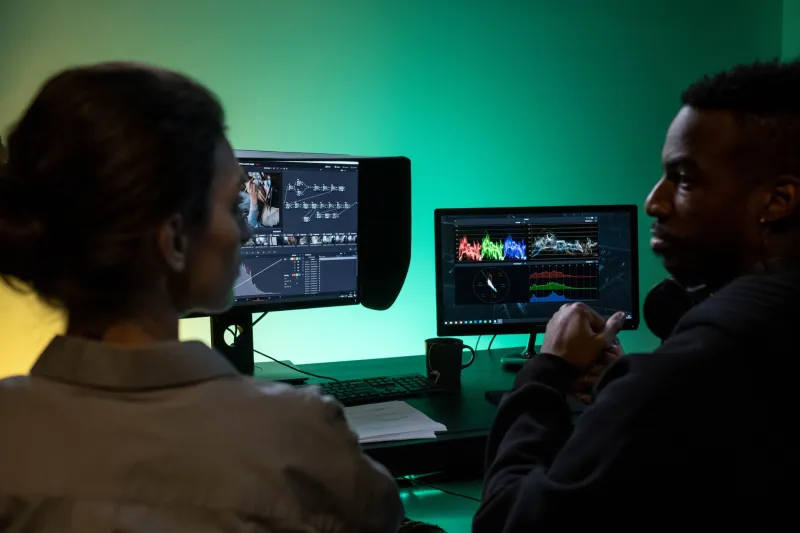
There is a particular kind of silence that settles over a post-production suite late in a project cycle. The picture is locked—or nearly so. The sound mix is refined. The grade is polished. And yet the team remains, circling the same sequence for the fourth consecutive session, adjusting a highlight here, nudging a low-frequency rumble there, convinced that one more pass will finally deliver the version the project deserves.
This is the finishing trap. And for independent studios and boutique production companies across the United States, it is one of the most expensive habits in the industry—not because the work is careless, but because the impulse behind it is so thoroughly reasonable that it rarely gets examined.
The Psychology Behind the Final Pass That Never Ends
Perfectionism in post-production rarely announces itself as a problem. It arrives wearing the language of craft. Colorists speak of dialing in the emotional register of a scene. Sound designers reference the way a room tone sits beneath dialogue. VFX supervisors describe the composite that reads as seamlessly real versus merely convincing. All of these concerns are legitimate. None of them, in isolation, constitute a crisis.
The crisis emerges in accumulation. When each department pursues its own standard of completion simultaneously, and when the client relationship or internal culture does not establish a clear threshold for "finished," the timeline extends in ways that rarely appear on the initial budget. Render queues lengthen. Session fees compound. The colorist who was scheduled for two days becomes a fixture for two weeks. The mix that was projected at forty hours creeps past sixty.
What drives this pattern is not incompetence. It is, in many cases, genuine professional pride operating without structural guardrails. Studios that have built their reputation on visual and sonic excellence are particularly vulnerable, because the institutional identity itself rewards the pursuit of the next refinement. The culture celebrates the extra mile. No one in the room is incentivized to call the work complete.
The Inflection Point No One Marks on the Schedule
Every post-production workflow contains an inflection point—a moment at which additional refinement yields returns that are no longer visible to the audience, the client, or even the critical eye of a dispassionate professional. Below that threshold, every hour of work produces measurable improvement. Above it, the work continues improving in ways that are essentially theoretical.
The challenge is that this inflection point is genuinely difficult to locate from within the process. When you are immersed in a project—when you have screened a sequence dozens of times, when your ear has calibrated to the finest details of a mix—your perception of what constitutes improvement becomes detached from the perception of anyone encountering the work fresh. You are, in a very real sense, optimizing for a version of the project that only exists for you.
This is not a failure of expertise. It is a structural feature of deep creative engagement. The more thoroughly you understand a project, the less capable you become of evaluating it the way its audience will. And it is the audience's threshold—not the colorist's, not the sound designer's—that should define when a project is complete.
What the Invisible Tax Actually Costs
The financial implications of unchecked post-production perfectionism extend well beyond the immediate budget overrun. Consider the compounding effects: a project that runs thirty percent over its post-production budget does not simply cost thirty percent more to complete. It delays the studio's capacity to begin the next project. It consumes the attention of senior creatives who should be developing new client relationships or refining the next production's pre-production framework. It erodes the margin that would have funded equipment upgrades, staff development, or the kind of speculative creative work that builds a studio's portfolio and reputation over time.
For smaller studios operating in competitive markets—whether in Los Angeles, New York, Austin, or Chicago—this erosion is not abstract. It is the difference between a studio that builds momentum across multiple projects per year and one that exhausts itself finishing the last project perfectly while the next one waits.
There is also a subtler cost that rarely appears in any budget document: the psychological toll on creative teams who are perpetually refining rather than creating. Post-production perfectionism, when it becomes a studio-wide pattern, produces a particular kind of fatigue. It is the fatigue not of hard work but of circular work—of effort that does not feel conclusive, that does not produce the satisfying finality of a project genuinely completed and released into the world.
A Framework for Knowing When You Are Done
The most effective studios develop explicit completion criteria before post-production begins, not during it. This means establishing, in conversation with the client and across internal departments, a defined set of deliverable standards that constitute a finished project. These standards should be specific enough to be actionable and conservative enough to be achievable within the projected timeline.
Several practical principles support this approach. First, schedule a formal "fresh eyes" screening at a defined point in the post-production process—ideally with at least one senior team member who has not been immersed in the daily work. Their reaction to the project as a whole, rather than to its component details, is the most reliable indicator of whether the work has reached an audience-ready standard.
Second, establish a rule governing the cost of additional refinement. Any post-production session that cannot be justified by a specific, articulable improvement visible to a non-specialist viewer should be treated as a discretionary expenditure—one that must be weighed against its opportunity cost, not simply absorbed as a line item in the finishing budget.
Third, distinguish between revisions that address genuine technical deficiencies and revisions that address creative preferences. The former are often non-negotiable. The latter are frequently optional, and the decision to pursue them should be made explicitly, with full awareness of what that decision costs.
The More Professional Choice
There is a persistent assumption in creative industries that finishing work to the absolute limit of technical possibility is the mark of a serious studio. This assumption deserves scrutiny. The studios that demonstrate the most durable professional credibility are not necessarily those that deliver the most technically refined product on every engagement. They are the studios that deliver work that meets or exceeds the agreed standard, on schedule, within budget, consistently—and that use the resources preserved by that discipline to grow, develop, and produce more work over time.
Knowing when a project is finished is not a concession to mediocrity. It is, in fact, one of the more sophisticated creative and operational judgments a studio can develop. It requires an honest accounting of what additional effort actually produces, and the discipline to act on that accounting even when the instinct to refine is strong.
The next project is always waiting. The question is whether your current one will leave it anything to work with.